BUILT FOR ORGANIZATION. LOVED BY LEARNERS
Everything You Need for Fair,
Secure Assessments
AI-powered security, zero-anxiety student experience, and effortless administration at any scale.
Book A Demo
Trusted to deliver high-stakes exams at scale. | Powered by upGrad









10 Lakh+
Exams delivered
40+
Institutions
99.99 %
Platform uptime
250k +
Test takers
WHY ORGANIZATIONS SWITCH?
Challenges With Online Exams Today
Designed to Solve This!
Book A Demo
Too many false alerts
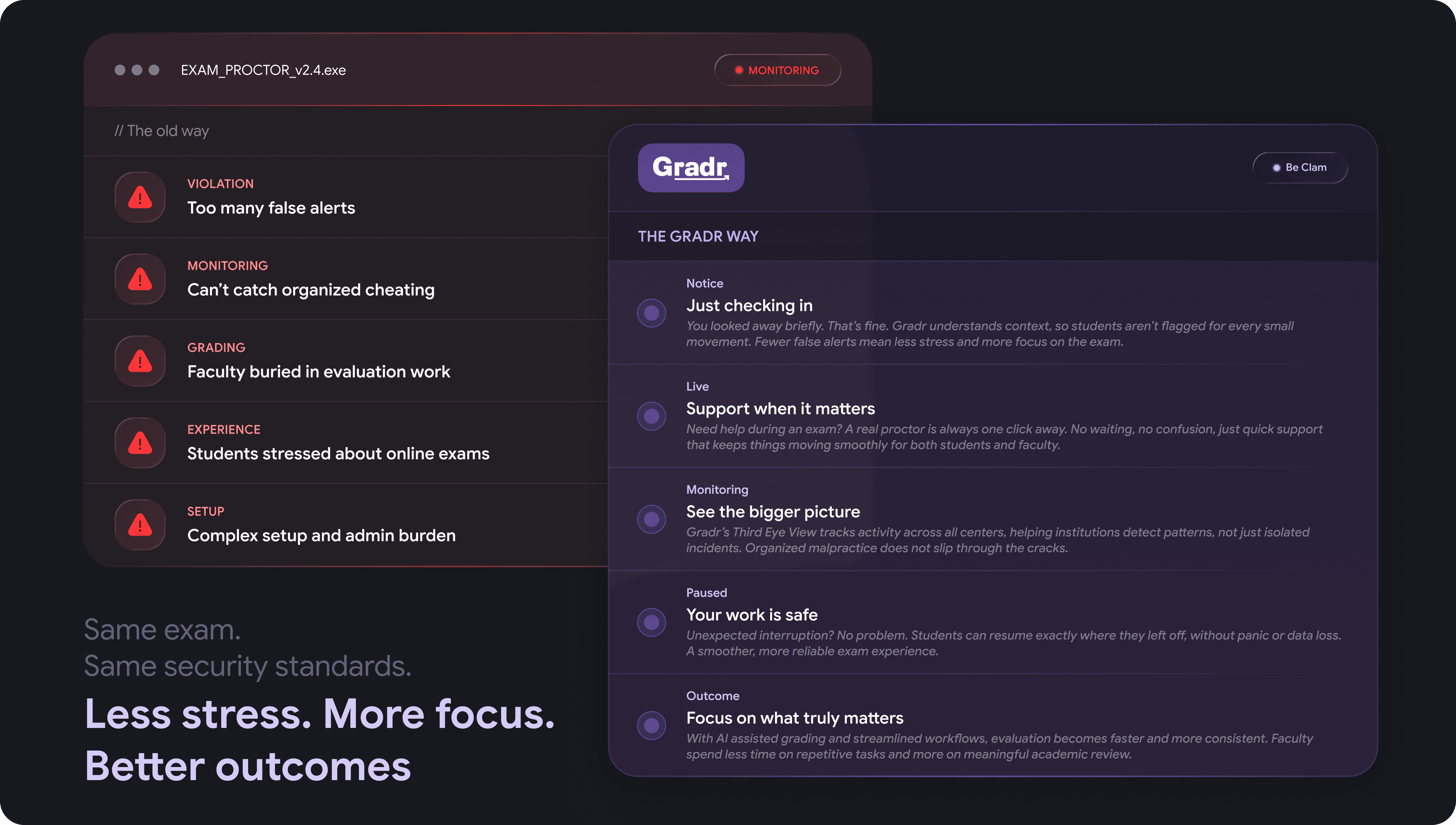
AI systems flag innocent behaviour like yawning and adjusting glasses, and proctors burn time reviewing noise.

Manual grading overload
Faculty spend days evaluating subjective answers, inconsistently and without bandwidth to give detailed feedback.

Students anxious about online format
First-time online test-takers are confused by interfaces, leading to helpdesk calls and disrupted exams.

Cheating across centres
Organised malpractice across multiple exam centres is nearly impossible to detect with standard proctoring.

Complex setup every cycle
Admins rebuild exams from scratch each semester, uploading users, setting rules, managing schedules manually.
Limited visibility & insights
Institutions lack real-time visibility into exam performance, making it hard to identify patterns, improve assessments, or take timely action.
The shift
Why do institutions choose Gradr?
Real problems, solved, not just promised.
Book A Demo
One platform, four roles
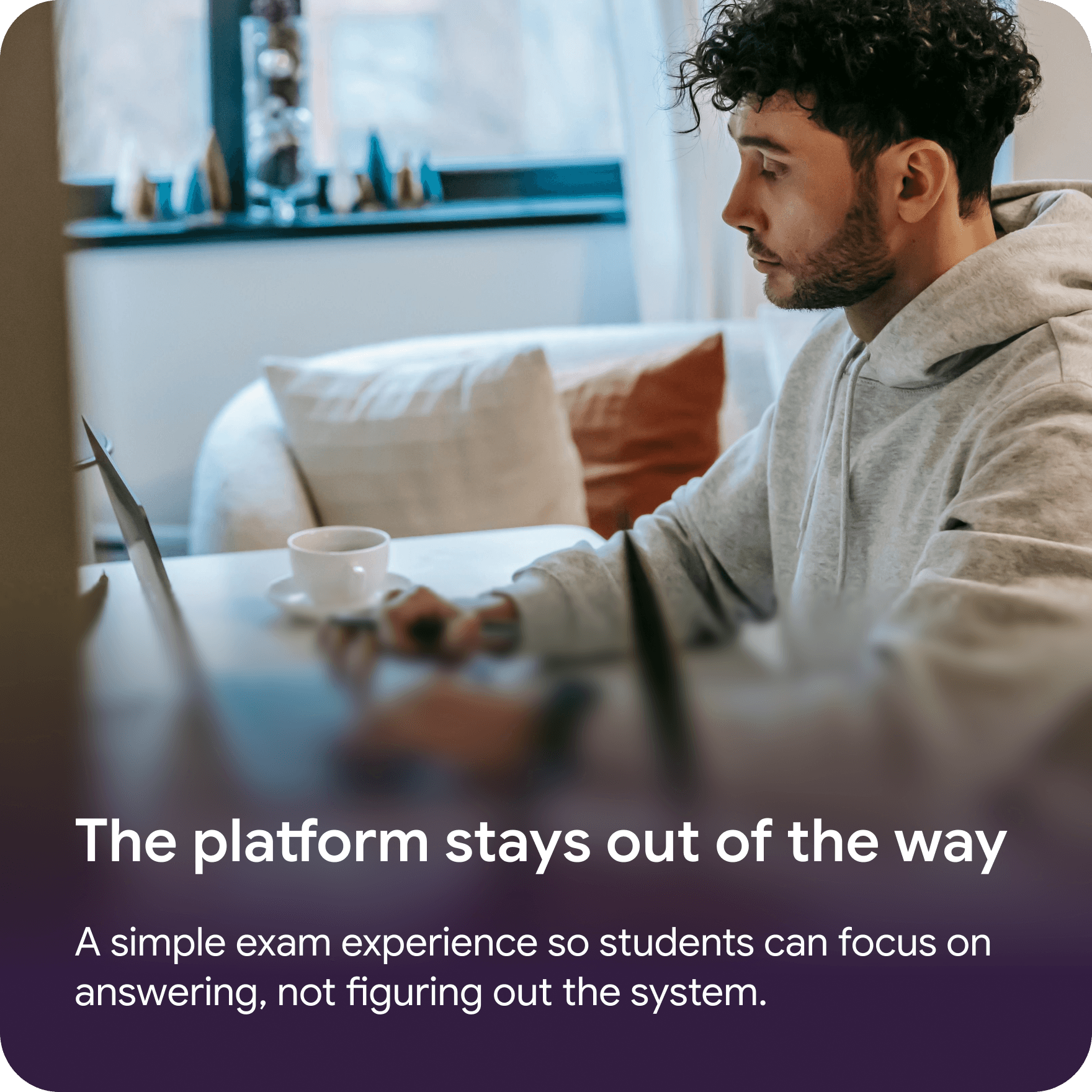
One system that supports every step and every role
Most exam platforms serve one audience well and the rest as an afterthought. Gradr is built for all four.
Book A Demo
For Learners
For Proctors
For Evaluators
For Admins
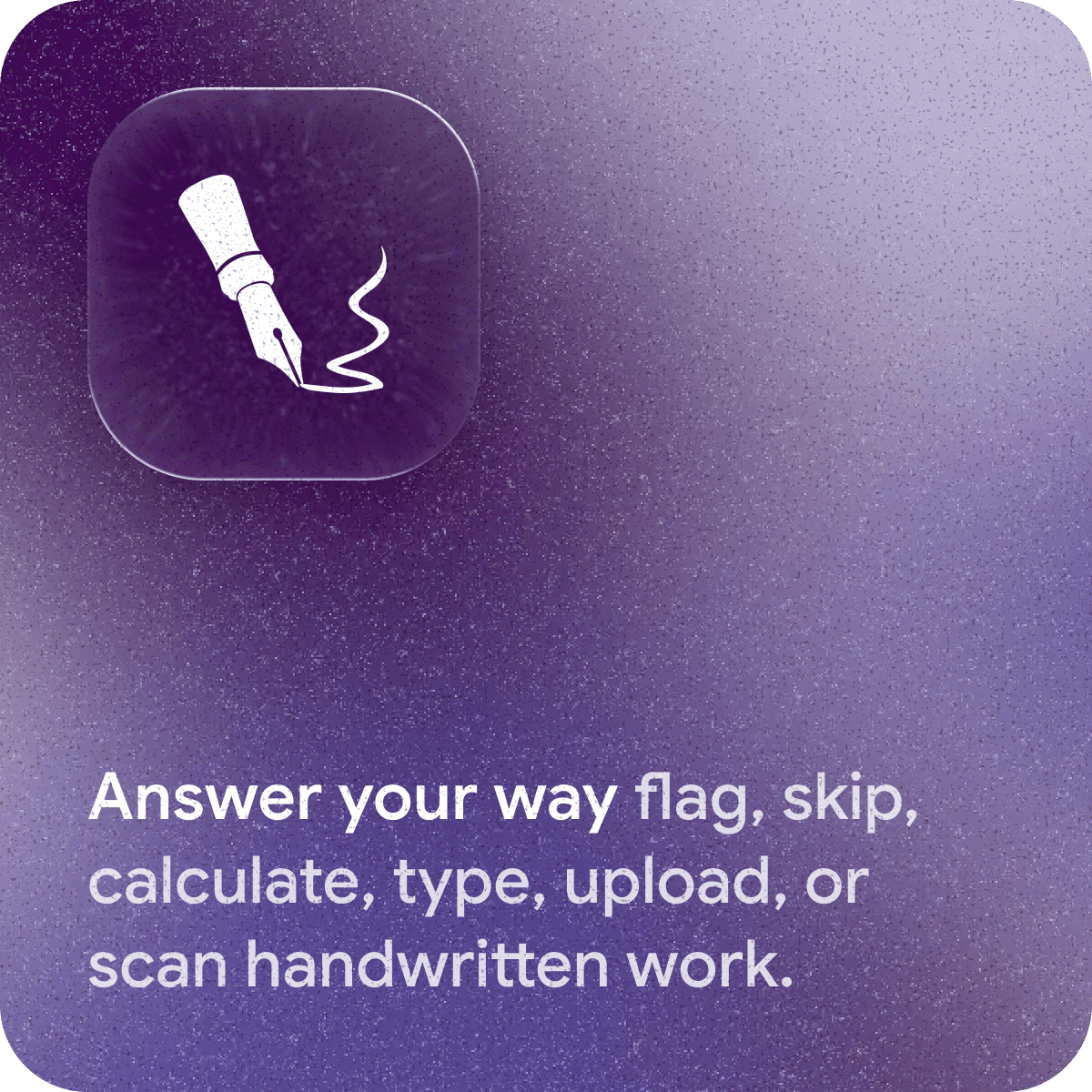

Platform overview
How Exam Runs on Gradr?
Five steps, one platform. From question bank to published results, nothing falls through the cracks.
Book A Demo
Stage 01
Create your exam structure
Upload your question bank, define sections, set timers, and apply randomization rules. Reuse templates each semester to save time and ensure consistency.
Stage 02
Deliver exams seamlessly
Students take exams in a secure browser environment that works across devices. Even low bandwidth setups run smoothly without disruptions.
Stage 03
Proctor with full visibility
AI monitors activity in real time while human proctors review flagged cases. Super proctors oversee all centers to catch patterns and prevent malpractice.
Stage 04
Grade with speed and control
AI suggests marks and feedback to speed up evaluation. Faculty reviews, adjusts, and approves, ensuring accuracy before results are finalised.
Stage 05
Report with complete clarity
Results are published with detailed feedback. Admins get dashboards, audit logs, and reports that are ready for compliance and review.
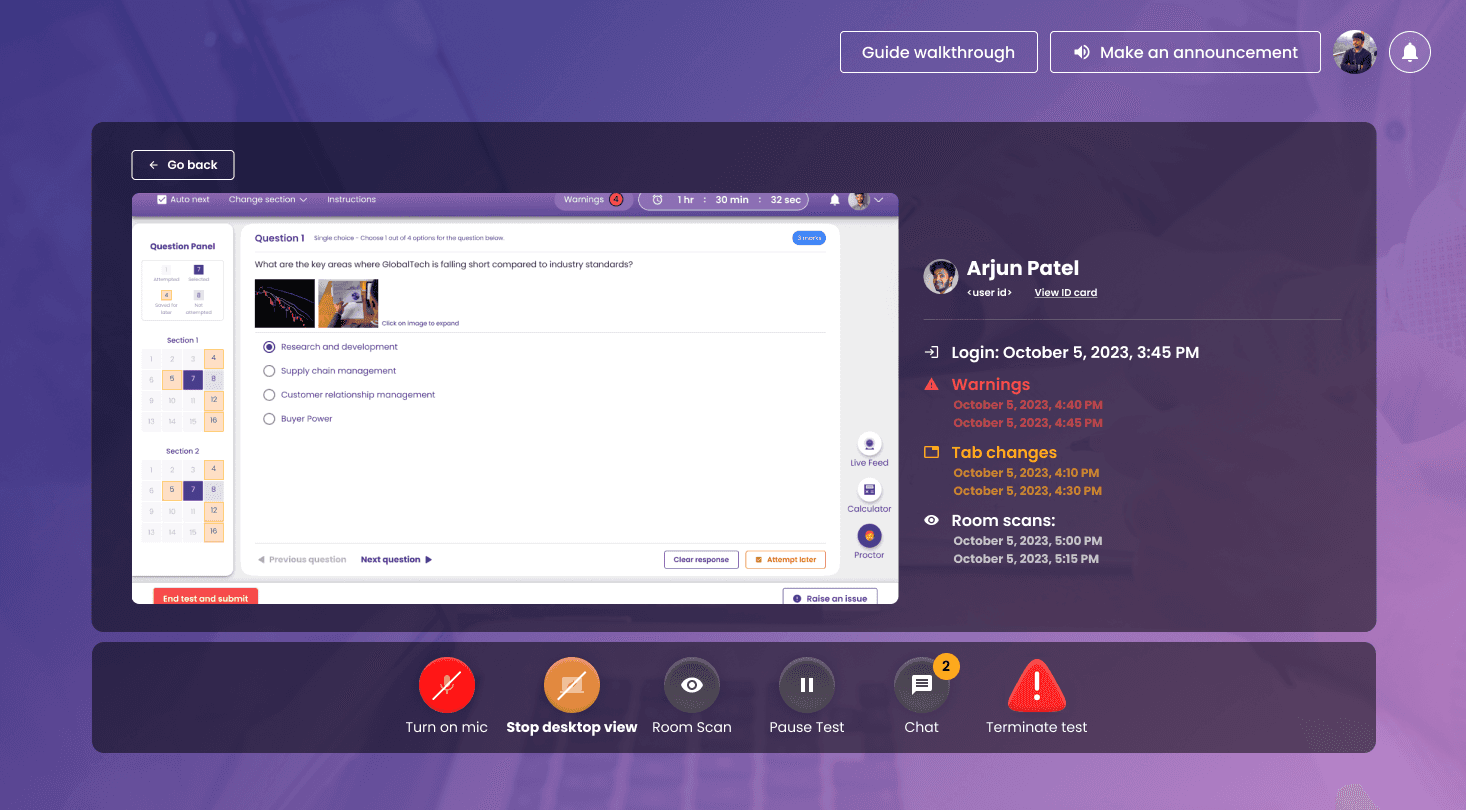
AI + human monitoring
How Are Exams Monitored?
AI for Scale. Humans for Judgement.
Book A Demo
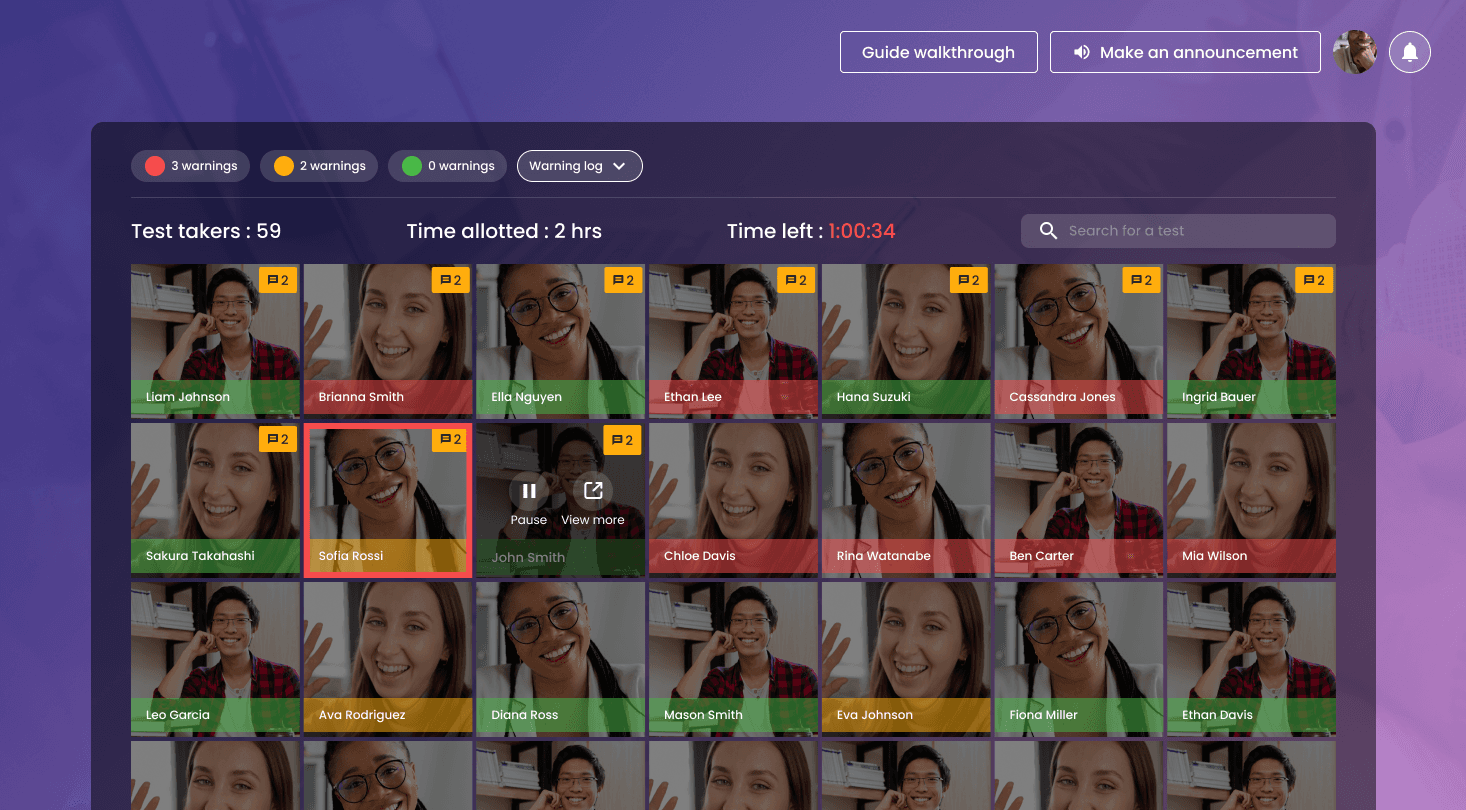
Face Visibility & Multiple Face Detection
Continuously verifies the candidate’s presence and flags additional faces in the frame.
Looking Away Detection (Pattern-Based)
Identifies suspicious gaze patterns over time, avoiding false alerts from brief distractions.
Mobile Phone Detection
Detects the presence or usage of mobile devices during the exam.
Tab Switching & Window Changes
Tracks and flags attempts to switch tabs or navigate away from the exam screen.
AI-assisted evaluation
How does grading
work for faculty?
AI handles the repetitive work. The faculty keeps full control over every mark.
Book A Demo
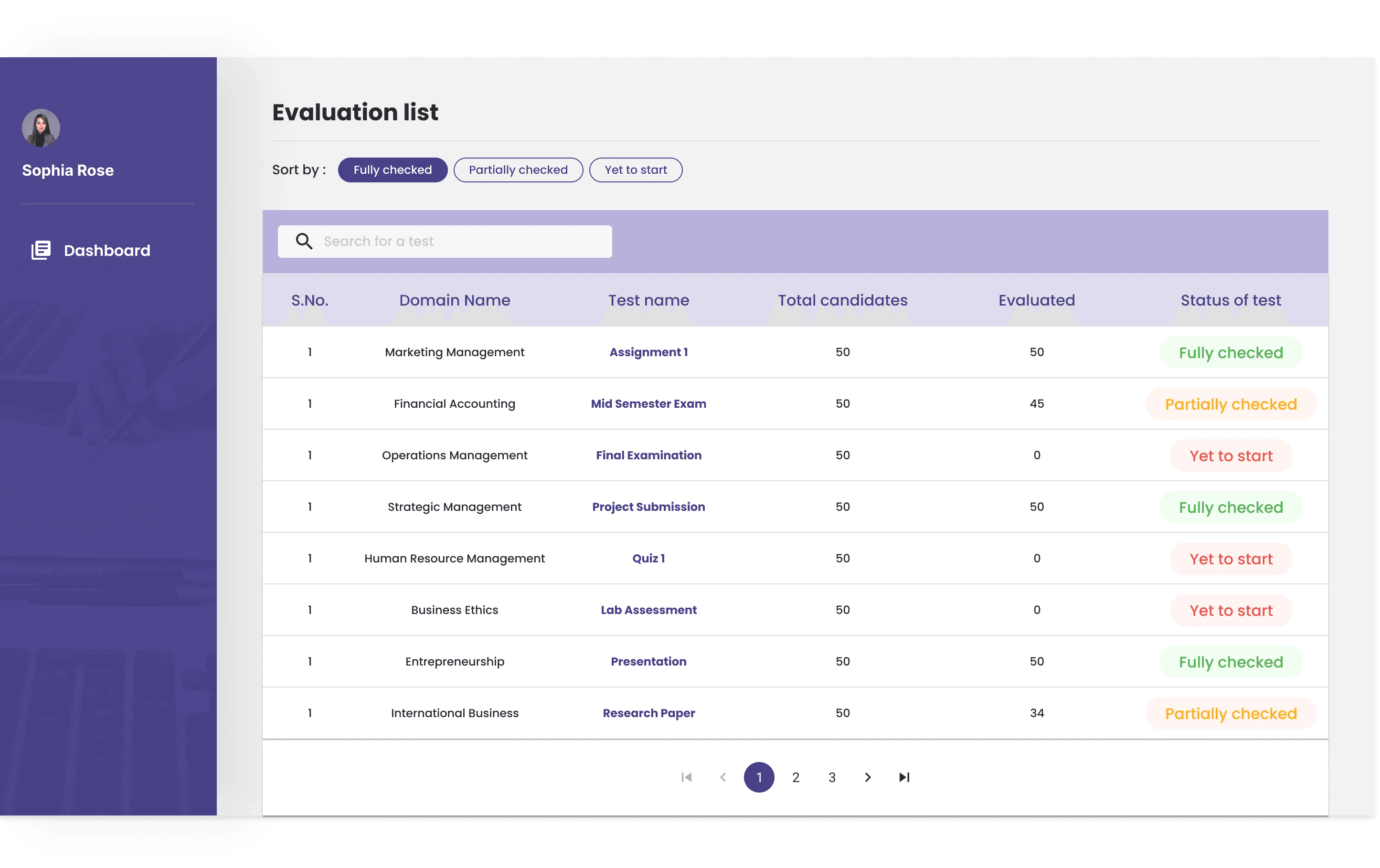
Step 1
You set the rubric
Define your grading criteria. AI evaluates every answer against the same rubric, with no inconsistency.
Step 2
AI suggests marks and feedback
Each answer gets a suggested score and auto-generated written comments, ready for faculty review.
Step 3
Faculty accepts, modifies, or overrides
Full control remains with the faculty. Not a single mark is published without a human review.
Step 4
Results published with per-question feedback
Students receive scores and feedback automatically. No manual result sheet preparation needed.
testimonials
Results That Speak
for Themselves
Book A Demo

Frequently asked questions
Questions institutions
ask us first.